 Skip to content

A professional handover is not complete just because the projector turns on. For fixed outdoor projection systems, the handover must confirm structural safety, optical performance, waterproof sealing, cooling, temperature control, electrical safety, reliable operation, maintenance readiness, and complete documentation. As an outdoor projector enclosure manufacturer, ShiRui recommends treating the handover as the final technical verification before owner acceptance.

What is outdoor projector enclosure handover checklist?
An outdoor projector enclosure handover checklist is a structured acceptance tool used before the installer, contractor, or AV integrator transfers responsibility to the owner or maintenance team. It confirms that the enclosure, projector, cooling system, waterproof sealing, electrical work, documentation, and maintenance instructions are complete and ready for long-term outdoor operation.
Practical Definition for Project Acceptance
A projector enclosure project handover is the point where installation responsibility moves from the contractor to the project owner. The checklist prevents a common mistake: accepting the project only because the projector displays an image. A complete outdoor projector enclosure acceptance process should verify installation quality, environmental protection, temperature control, electrical safety, and maintenance readiness.
Based on our internal data and market analysis, here is the breakdown:
| Handover Area | What It Confirms | Why It Matters |
|---|---|---|
| Mechanical installation | Mounting, bolts, brackets, support structure | Prevents instability, vibration, and safety risks |
| Optical alignment | Lens position, focus, projection angle, optical window clearance | Ensures image quality and avoids beam obstruction |
| Waterproof sealing | Door gaskets, cable glands, access panels, unused holes | Protects IP65 performance after installation |
| Cooling and airflow | Intake, exhaust, fan direction, air-conditioning operation | Prevents overheating under real projector load |
| Electrical inspection | Power input, grounding, circuit protection, cable labeling | Supports safety and serviceability |
| Documentation | Drawings, settings, manuals, test records | Allows future maintenance and troubleshooting |
ShiRui Pro Tip: I always recommend that the owner signs acceptance only after seeing the projector run inside the closed enclosure under normal working conditions, not during an open-door test.
How Does outdoor projector enclosure handover checklist Work?
The checklist works by guiding the project team through step-by-step inspection, commissioning, testing, correction, documentation, and final approval. Each item is marked as PASS, FAIL, N/A, or corrective action required, so unresolved issues are visible before the enclosure system is formally handed over.

Commissioning Workflow Before Acceptance
A professional outdoor projector enclosure commissioning process should follow a clear sequence. This avoids testing the projector image first while ignoring waterproofing, airflow, or electrical issues that may cause later failure.
- Confirm the installed enclosure model, projector model, lens model, and mounting type.
- Inspect mechanical supports, brackets, bolts, enclosure alignment, and maintenance clearance.
- Check projector position, lens-to-window alignment, throw ratio, focus, and image geometry.
- Verify all door gaskets, cable glands, optical-window seals, access panels, and unused cable holes.
- Test cooling airflow direction, fan operation, filter condition, hot-air exhaust path, and internal clearance.
- Run the projector with the enclosure closed and monitor internal temperature response.
- Inspect electrical power, grounding, cable strain relief, circuit protection, and cable labeling.
- Confirm humidity control, heating, anti-condensation, alarms, and remote monitoring where installed.
- Record test results, final photos, temperature-control settings, and unresolved corrective actions.
- Train the owner or maintenance team before final signature.
ShiRui Pro Tip: In my experience, the most valuable handover test is a closed-enclosure operating test. It shows whether cooling, airflow, and temperature control actually work together under load.
What are the benefits of outdoor projector enclosure handover checklist?
The main benefit is risk reduction. A professional outdoor projector enclosure handover checklist helps identify installation defects before acceptance, protects projector performance, supports IP65 sealing integrity, improves maintenance readiness, reduces warranty disputes, and gives facility teams clear records for future operation and troubleshooting.
Operational and Commercial Advantages
For AV integrators, projection contractors, project managers, and facility owners, the checklist creates a shared technical record. It separates confirmed acceptance items from incomplete work and makes the handover process objective rather than opinion-based.
Based on our internal data and market analysis, here is the breakdown:
| Benefit | Practical Result | Typical Risk Reduced |
|---|---|---|
| Clear acceptance standard | Everyone checks the same items | Disputes over project completion |
| Better waterproof reliability | Cable glands, gaskets, and unused holes are verified | Water ingress and IP65 failure |
| Improved thermal protection | Cooling is tested with the projector operating | Overheating and shutdowns |
| Stronger maintenance readiness | Owner receives instructions and records | Incorrect cleaning or neglected filters |
| Easier troubleshooting | Wiring diagrams, settings, and photos are available | Long service delays |
| Safer installation | Structure, grounding, and electrical protection are checked | Safety and compliance problems |
Common handover mistakes include:
- Testing the projector without checking enclosure temperature.
- Failing to verify airflow direction.
- Not checking cable gland sealing.
- Leaving unused cable holes open.
- Ignoring condensation or water marks.
- Not testing industrial air conditioning under projector load.
- Forgetting to record temperature-control settings.
- Missing wiring diagrams or installation photos.
- Handing over the project without training the maintenance team.
ShiRui Pro Tip: I treat every missing document as a future service delay. A good handover package is not paperwork for formality; it is the maintenance team’s first troubleshooting tool.
How to maintain an outdoor projector enclosure handover checklist?
To maintain an outdoor projector enclosure handover checklist, update it whenever equipment, wiring, settings, filters, seals, cooling components, or maintenance responsibilities change. The checklist should remain a living service record, not a one-time installation document stored away after the original acceptance.
Keeping the Checklist Useful After Handover
A checklist has long-term value only when it reflects the current site condition. Outdoor projector enclosures are exposed to heat, humidity, rain, dust, salt air, insects, vibration, and seasonal temperature changes. Even IP65 protection does not mean maintenance-free operation.
Recommended maintenance review items include:
- Check optical window cleanliness and inspect for scratches, dust, fingerprints, condensation, or seal damage.
- Inspect door gaskets, cable glands, locks, access panels, and unused cable openings.
- Confirm that projector intake and exhaust paths remain unobstructed.
- Clean or replace filters according to site conditions and operating hours.
- Inspect fans for abnormal noise, vibration, reduced airflow, or failure.
- Check internal temperature records and controller settings.
- Inspect industrial air-conditioning condenser airflow and drainage where applicable.
- Look for condensation, water marks, abnormal humidity, or corrosion.
- Verify grounding, cable labeling, strain relief, and power distribution condition.
- Update photos, test records, and corrective action logs after each service visit.
Maintenance frequency should depend on environment. Dusty, desert, coastal, roadside, high-humidity, and high-temperature locations usually require more frequent inspection than clean indoor-adjacent installations.
ShiRui Pro Tip: I advise maintenance teams to compare every service visit against the original handover photos. Changes in cable routing, seal compression, filter color, or corrosion are often easier to see visually than to describe.
What is the price of outdoor projector enclosure handover checklist?
The checklist itself is usually part of professional project management or commissioning, but the total cost depends on enclosure complexity, site location, cooling configuration, electrical requirements, testing duration, documentation scope, and whether corrective work is needed before final outdoor projector enclosure acceptance.
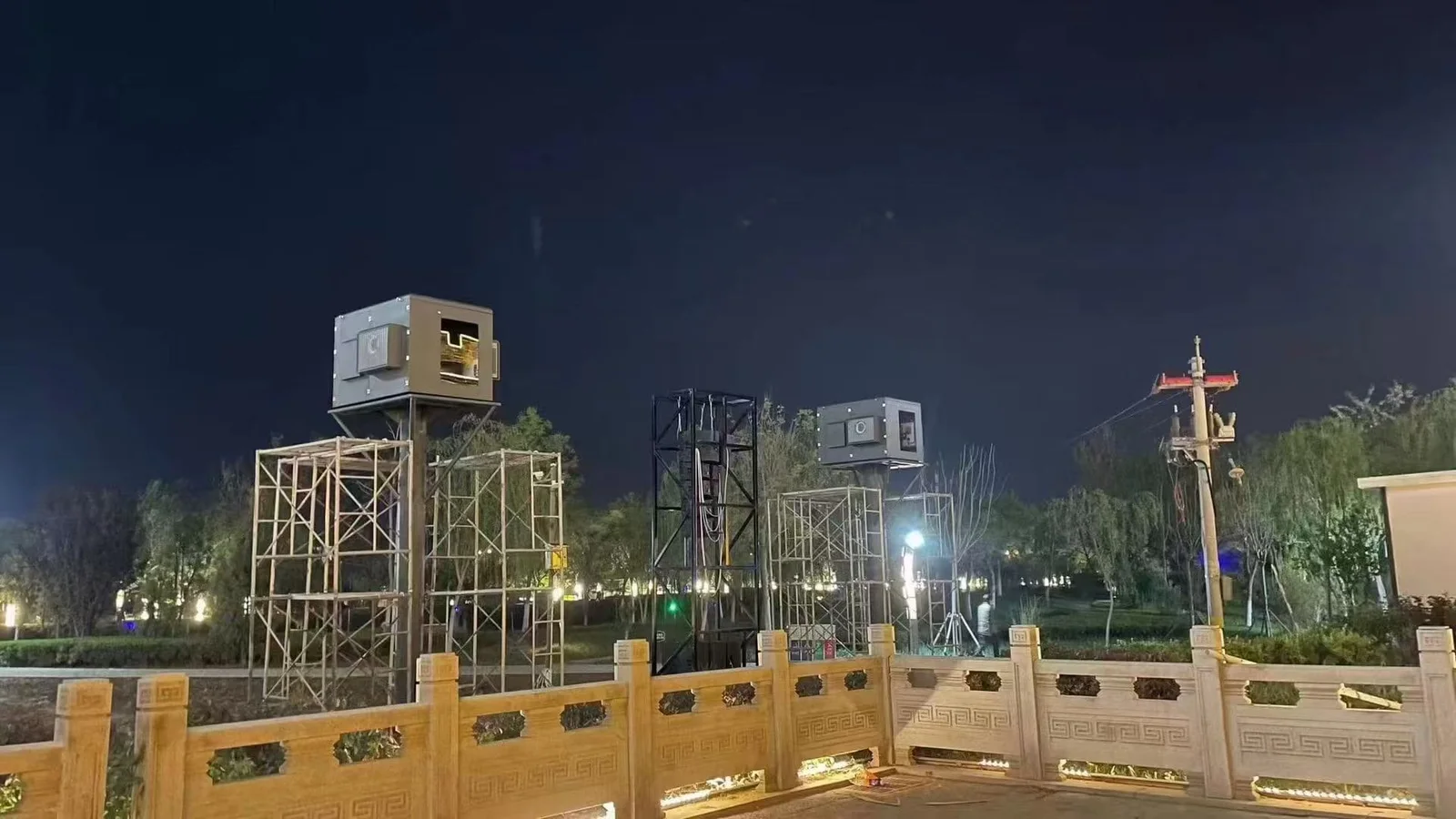
Pricing Factors for Handover and Commissioning
The price of a handover process is not only the cost of filling out a form. It includes technician time, testing instruments, access equipment, site coordination, extended operation testing, report preparation, and sometimes rework. For custom ShiRui outdoor projector enclosures, commissioning requirements vary by enclosure material, cooling method, mounting type, and operating environment.
Based on our internal data and market analysis, here is the breakdown:
| Cost Factor | Lower Complexity | Higher Complexity |
|---|---|---|
| Mounting structure | Wall or platform mounting with easy access | Pole, ceiling frame, or custom structural support |
| Cooling system | Forced-air cooling with filters | Industrial air conditioning, heater, humidity control |
| Temperature range | Mild outdoor environment | Approximately -30°C to +60°C design conditions |
| Documentation | Basic drawings and manuals | Full wiring diagrams, test records, photos, settings |
| Testing duration | Short functional test | Extended closed-enclosure load test |
| Site access | Ground-level service | Lift, roof, restricted access, or nighttime testing |
| Corrective work | No defects found | Resealing, rewiring, airflow correction, bracket adjustment |
Typical budget considerations include:
- Technician labor for inspection and commissioning.
- Electrical inspection by qualified personnel where required.
- Lift equipment or special access tools.
- Replacement filters, seals, cable glands, labels, or fasteners.
- Report preparation and client training.
- Return visit if FAIL items require correction.
ShiRui Pro Tip: I recommend budgeting time for one corrective action cycle. Outdoor installations often reveal small issues—such as cable gland sealing or airflow obstruction—that are inexpensive to fix before handover but costly after acceptance.
Key Features & Comparison
A strong outdoor projector enclosure handover checklist should cover mechanical safety, optical alignment, waterproof sealing, airflow, temperature control, electrical work, condensation prevention, functional testing, documentation, and maintenance training. The best checklists are practical enough for installers and detailed enough for engineers and facility managers.
Checklist Feature Comparison for Fixed Outdoor Projection
Based on our internal data and market analysis, here is the breakdown:
| Feature | Basic Project Check | Professional ShiRui-Style Handover Check | Why It Matters |
|---|---|---|---|
| Projector power-on | Confirms projector starts | Confirms startup inside closed enclosure under load | Power-on alone does not prove system reliability |
| Mechanical mounting | Visual bracket check | Bolts, supports, level, alignment, stability, maintenance clearance | Reduces structural and safety risks |
| Optical path | Image appears on screen | Lens center, window clearance, focus, throw ratio, image position | Prevents image clipping and optical obstruction |
| Waterproofing | Door appears closed | Gaskets, glands, unused holes, locks, panels, window seals | Maintains practical IP65 performance |
| Cooling | Fan runs | Airflow direction, intake/exhaust separation, filters, hot-air recirculation | Prevents overheating |
| Temperature control | Controller powered | Sensor reading, cooling/heating activation, settings, alarm response | Confirms real thermal management |
| Electrical | Power connected | Grounding, circuit protection, cable labeling, strain relief | Supports safety and maintenance |
| Moisture control | No visible rain entry | Condensation, drainage, humidity, heater/dehumidifier operation | Prevents hidden long-term damage |
| Documentation | Manual supplied | Drawings, wiring diagrams, settings, photos, test records, warranty | Enables future service |
| Training | Not included | Owner learns cleaning, filter checks, alarms, seals, safe access | Improves long-term operation |
A practical final checklist can be used in the following format:
Based on our internal data and market analysis, here is the breakdown:
| Inspection Item | What to Check | Status | Remarks |
|---|---|---|---|
| Enclosure mounting | Bolts, brackets, support structure, installation stability | PASS / FAIL / N/A | Corrective Action Required: ___ |
| Projector platform | Secure mounting, correct orientation, vibration control | PASS / FAIL / N/A | Corrective Action Required: ___ |
| Lens and optical window | Alignment, clearance, clean glass, no beam obstruction | PASS / FAIL / N/A | Corrective Action Required: ___ |
| Image test | Focus, position, projection angle, throw ratio, image quality | PASS / FAIL / N/A | Corrective Action Required: ___ |
| Door gaskets | Complete sealing, no deformation, even closure | PASS / FAIL / N/A | Corrective Action Required: ___ |
| Cable glands | Tight, sealed, correct cable strain relief | PASS / FAIL / N/A | Corrective Action Required: ___ |
| Unused holes | Fully sealed, no open penetrations | PASS / FAIL / N/A | Corrective Action Required: ___ |
| Cooling system | Fans, filters, airflow direction, no recirculation | PASS / FAIL / N/A | Corrective Action Required: ___ |
| Air conditioner | Start/stop, condenser airflow, drainage, internal circulation | PASS / FAIL / N/A | Corrective Action Required: ___ |
| Internal temperature | Stable under projector load, target range approximately 5°C–35°C | PASS / FAIL / N/A | Corrective Action Required: ___ |
| Humidity and condensation | No abnormal moisture, water marks, or condensation | PASS / FAIL / N/A | Corrective Action Required: ___ |
| Electrical grounding | Ground connection, power distribution, circuit protection | PASS / FAIL / N/A | Corrective Action Required: ___ |
| Signal and control cables | Labeling, stability, routing, strain relief | PASS / FAIL / N/A | Corrective Action Required: ___ |
| Remote monitoring | Temperature, alarms, status feedback where installed | PASS / FAIL / N/A | Corrective Action Required: ___ |
| Exterior condition | Coating, scratches, dents, corrosion, locks, labels | PASS / FAIL / N/A | Corrective Action Required: ___ |
| Documentation | Drawings, diagrams, manuals, settings, photos, test records | PASS / FAIL / N/A | Corrective Action Required: ___ |
| Maintenance training | Safe access, cleaning, filters, alarms, service contact | PASS / FAIL / N/A | Corrective Action Required: ___ |
| Final customer acceptance | Owner confirms open items and signs acceptance | PASS / FAIL / N/A | Corrective Action Required: ___ |
ShiRui Pro Tip: I prefer checklists that leave space for remarks and corrective actions. A simple PASS box is not enough when outdoor conditions, custom mounting, and cooling configurations vary from project to project.
Cost & Buying Factors
When buying or specifying an outdoor projector enclosure, the handover checklist should be considered from the beginning. Material, IP rating, cooling method, mounting design, temperature range, electrical layout, and maintenance access all affect not only purchase cost but also installation, commissioning, and long-term service requirements.
Specification Items That Affect Total Project Value
ShiRui manufactures outdoor projector enclosures and custom sheet metal enclosures for long-term fixed installations. A good buying decision should consider the full project lifecycle, not only the enclosure price. Professional handover becomes easier when the enclosure is designed with service access, airflow, cable entry, and documentation in mind.
Based on our internal data and market analysis, here is the breakdown:
| Buying Factor | Common Options | Handover Impact |
|---|---|---|
| Material | Galvanized steel, aluminum alloy, 304 stainless steel | Affects corrosion resistance, weight, and mounting structure |
| Protection level | IP65 commonly used for professional outdoor enclosures | Requires correct sealing during installation |
| Cooling method | Forced air, intelligent temperature control, industrial air conditioning | Determines commissioning test scope |
| Heating and anti-condensation | Heater, humidity control, dehumidification where required | Important for cold or humid sites |
| Temperature design | Approx. -30°C to +60°C depending on configuration | Requires proper component selection and testing |
| Internal target temperature | Approx. 5°C–35°C typical target range | Must be verified under operating load |
| Mounting structure | Pole, wall, platform, ceiling/support frame, custom | Affects safety inspection and access |
| Cable entry design | Glands, sealed entry plates, custom cable routing | Critical for waterproofing and maintenance |
| Service access | Doors, panels, filter access, clearance | Reduces future maintenance difficulty |
| Documentation package | Drawings, wiring diagrams, settings, test records | Supports final acceptance and after-sales service |
Before purchasing, project teams should clarify:
- Projector model, lens model, throw distance, and orientation.
- Outdoor ambient temperature range and humidity conditions.
- Required IP protection and corrosion resistance.
- Cooling load and projector heat output.
- Site mounting structure and maintenance access.
- Power supply, grounding, signal cabling, and control needs.
- Whether remote monitoring, alarms, heating, or dehumidification are required.
- Documentation, warranty, and commissioning support expectations.
ShiRui Pro Tip: I encourage buyers to share site photos, projector specifications, lens data, and climate conditions before production. The more accurate the input, the fewer compromises appear during installation and handover.
Conclusion
A reliable handover proves that the outdoor projector enclosure system is safe, sealed, cooled, aligned, documented, and ready for maintenance. The projector turning on is only one test. Final acceptance should confirm the complete installation environment that allows the projector to operate reliably outdoors.
Final Acceptance Guidance for Project Teams
A professional outdoor projector enclosure inspection checklist protects all parties: the installer, AV integrator, contractor, project owner, and maintenance team. It creates a clear technical record and prevents hidden problems from being accepted as completed work.
Final acceptance should confirm:
- Structural safety of the enclosure and mounting system.
- Correct projector and lens installation.
- Clear optical path through the enclosure window.
- Effective waterproof sealing of doors, windows, cable glands, and unused openings.
- Correct airflow direction and no hot-air recirculation.
- Temperature-control performance under projector load.
- Electrical safety, grounding, cable labeling, and strain relief.
- No abnormal condensation, water marks, or humidity issues.
- Stable image, signal, power, alarms, and monitoring functions.
- Complete drawings, manuals, settings, photos, and test records.
- Maintenance training for the owner or facility team.
ShiRui can support outdoor projector enclosure projects with custom enclosure design, sheet metal manufacturing, cooling configuration, IP65-oriented structure, and practical handover guidance for fixed outdoor projection systems. Local engineering, electrical, and safety requirements should always be followed, and qualified personnel should inspect regulated work where required.
ShiRui Pro Tip: My final rule is simple: if the maintenance team does not know how to open, inspect, clean, monitor, and report problems with the enclosure, the project handover is not truly complete.

